Calculate Your Savings
HERE
Boxes Created 1600000000
90000000 CO₂ Saved (lbs)
4518639.77 Trees Saved


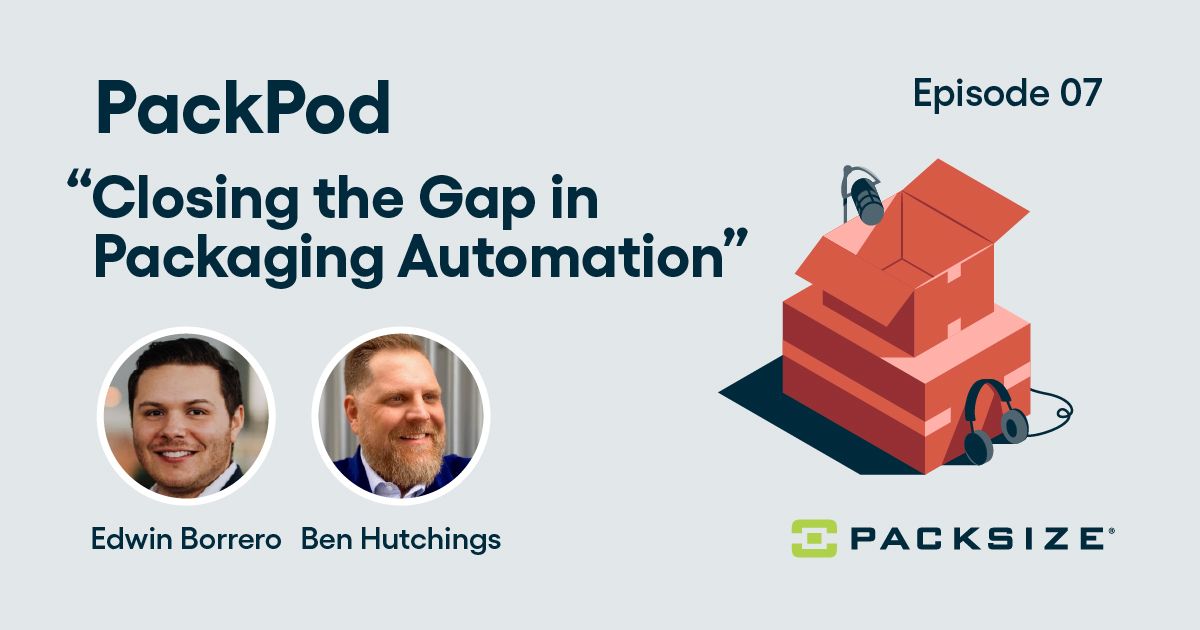

Automation can speed up packaging and make it more efficient, but what happens when that automation stops before the box is ready to ship? If closing is still a manual process, the bottleneck doesn’t disappear. It simply moves downstream.
Join Edwin Borrero, Senior Product Development Manager, and Ben Hutchings, Senior Software Product Manager, as they discuss the gap between automated box creation and automated closing. From manual closing with limited visibility to 3D right-sizing with end-to-end data, they explore what it takes to keep highly automated packaging operations moving.
In this episode of PackPod, Ben and Edwin explain how downstream closing can help eliminate bottlenecks, extend visibility across the order lifecycle, and bring packaging automation all the way to a ship-ready box.
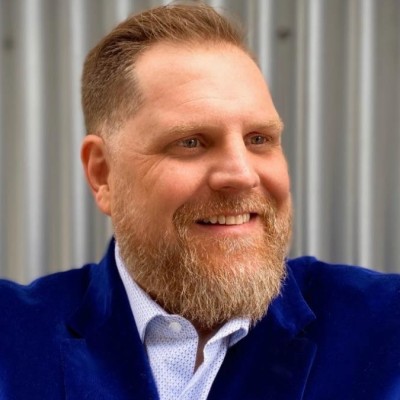
Ben Hutchings: Hi. My name is Ben Hutchings. I work for Packsize as a Senior Software Product Manager, working on all of our software integration platforms. Joining me today is Edwin. You wanna introduce yourself, Edwin?
Edwin Borrero: Hi. My name is Edwin Barrero. I'm a Senior Product Development Manager on the hardware side at Packsize, specifically on the high automation side. So, from right-sized, fully automated cartons to downstream closing.
Ben Hutchings: Very cool. Speaking of downstream closing, that's what we're gonna be talking about today. So, talking about automated closing, you know, companies have invested heavily throughout the years, and there's been a lot of automation and right-sizing boxes. But what happens when those boxes get to the end of the process? And the box is produced; they've got product in the box, you know what happens then? If closing is still a manual process, we're just moving that bottleneck to the end rather than having it up front. So wanna talk about that today and talk about automation in the closing space and how it could be effective and what we're doing today. So, with that said, let's talk about that, Edwin. When does closing become a bottleneck for customers? What do we see out in the field?
Edwin Borrero: I think you alluded to it a little bit in the beginning. A lot of companies are investing heavily in automation, and a lot of that automation comes at the front end, as you could say. Right? You know, they're investing in AMRs, automated robots, ASRS systems, and conveyance, and all these types of automation to--
Ben Hutchings: Upstream.
Edwin Borrero: Yeah. Upstream automation to help these processes be as efficient as possible.
Ben Hutchings: And when we say upstream, we're talking upstream from carton creation specifically. Right?
Edwin Borrero: Correct. Yeah. Before and up to when product actually makes it into the carton. And so when you have a 3D right-sized carton, you need to make sure that carton meets up with the correct product at the right time, and that's all good and fine now. You know, we've kind of solved that part of the equation. But now what do you do with that right-sized carton? You still have to, in most cases, manually pick the product into the box, and then you manually have to seal a box, usually at the time of picking. When we looked at the market heavily, we recognized that the downstream closing aspect is still relatively unsolved. There are a lot of companies that do semi-automated or completely manual closing solutions, and we recognize that our customers and our partners are really looking for Packsize to develop a downstream high-speed automated closing solution.
Ben Hutchings: Right. Yeah. Let me ask a couple questions there. That's really interesting. You mentioned, you know, manually picking into a box. I think that's a great topic for maybe another episode. We don't wanna get into that today. But manually closing specifically—you know, right now, we're talking with one of our machines, you can produce up to like, 1,500 boxes an hour or something like that or in that range as far as creating the patterns or trays. Right?
Edwin Borrero: Yeah. We have a lot of high-speed automation platforms at Packsize, up to 1,500 cartons an hour, which is fast. We know that's a lot of boxes at one time. And when you have a downstream closing machine that can't keep up, like you said, you're moving that bottleneck just further down the stream.
Ben Hutchings: Where in most cases, there's no machine that can close it. So I think back to the customers we've visited with and operations that we've seen where they may have their X5, their X6 machine producing really fast and producing over a thousand cartons an hour. And then you walk down a little further on the line, you've got humans standing there that are packing and closing these boxes. And, realistically, what? Somebody closing a box and getting it out the door—maybe 50 an hour, if you're going fast, is probably realistic for a human to close. So what is that? Like, a 10/20x for one closing machine. But now if we introduce a closing machine that can automatically recognize and close the boxes, we're eliminating that bottleneck, but also just speeding up the overall process. Right?
Edwin Borrero: Right. The closing process, and it depends on the subprocesses associated with box closing, but, yeah, you can really bottleneck an otherwise fully efficient high automated system if you don't have an automated downstream closing solution.
Ben Hutchings: Yeah. That's really interesting. And another thing kind of thinking about that is the visibility. Right? So right now, you create a carton, and it goes out of the machine onto a conveyor, and it's kind of in a black box, if you will, until it gets picked, packaged, and closed. And then, hopefully, it shows up at a truck and somebody scans it as they put it on a truck, so we know it's going out the door. But there's that kind of gap in visibility of where that package is in the solution. There's some really important data that could be useful or helpful that we're missing. Right?
Edwin Borrero: Yeah. I think, you know, when you couple fully automated solutions, I think that visibility into software, data, and analytics is almost as important as the actual hardware itself, if not maybe even more important.
Ben Hutchings: Yeah. Totally. I agree. And how does introducing a closing machine like our LidPro X machine, for example, help fill that gap and transparency to that package as it comes out of the X6 machine?
Edwin Borrero: Yeah. Usually, when customers incorporate Packsize or 3D right-sizing, we make the carton. We make it really well. Right? And we have all the analytics associated with that. We know how much material you're using. We know how long it took to be made, things like that. And that kind of ends right there. But now with our downstream closing, we have the visibility into the front end and into the back end. So now we can see when the carton was made, when the carton was closed. Maybe, you know, if it wasn't closed correctly, we can print labels. We can do all of these other things that didn't exist until we developed downstream right-size closing. Simply because, like you mentioned earlier, Ben, that historically, it's been a manual process. You're done picking the box, you're manually closing it, and that's it.
Ben Hutchings: Yeah. I think it's also interesting. One thing I've noticed as we've gone down this path together a little bit, Edwin, is when the box comes out of, say, an X6 and it needs to have a lid put on it, we now have visibility into what boxes, what orders, what cartons are waiting to be closed, like, in the picking process or actively being picked. Right? And you can see how many there are and which ones specifically they are. And then, also, once it does hit the machine and it automatically scans it, recognizes, and closes it, we have good visibility into how long that took. So if we're looking at improving efficiencies on picking time or trying to move things through faster, we'd be able to see specifically now how long each particular package takes to get from creating the box out of the machine up until the point it was closed. So there's some really valuable data there for, you know, that could be used potentially in the future for efficiencies and analyzing the solution for opportunities for other improvements as well. So I think that's really cool visibility that this provides that maybe people don't think about as much when they're thinking about automating closing. It's like, now I don't have to have a human closing package. Well, I also have a lot of data that I can use to help myself improve my overall solution. Right?
Edwin Borrero: I think it's important for us to understand kind of that full order lifecycle management or whatever you wanna call it. Like I said, we can tell you how much material was made on the carton, but, you know, like you mentioned, the total amount of time it took for that order to actually process from beginning to end, which, in some cases, isn't always visible. Right? Because once you hit that manual process, your data tracking just kinda stops there. But now we have that smart hardware coupled with our PackNet software to capture all of those data points from beginning to end.
Ben Hutchings: Yeah. Great. So you've mentioned a couple of times, like, how much material is used or 3D sizing. Let's just quickly touch on that. So with the solution that we're providing at Packsize, are we actually 3D sizing with a tray and lid solution?
Edwin Borrero: Yeah. It's exciting. But we've been around for the 3D right-sizing for quite a while now. But now with our high automation platforms, we are 3D right-sizing in all dimensions. You know, your length, your width, your height. And, you know, while there are downstream solutions that can do a 1D right-sizing or a one dimensional, typically in the height.
Ben Hutchings: Height sizing. Right?
Edwin Borrero: Yeah. You're reducing the height of the carton only. We knew that wasn't enough. The 3D right-sizing is truly a big benefit in all aspects, in your efficiencies and shipping efficiencies and what have you. But so our capability and our ability to introduce this full right-sizing, both length, width, and height, with downstream closing was a big challenge for us. But, you know, we managed to come up with some pretty creative solutions to accommodate that.
Ben Hutchings: Yeah. That's amazing. I think it's worth calling out that other solutions on the market today, they do just add single height rights. You know, height sizing, I guess, is what you would say, to reduce the height to the minimum that it can be for the product in the box. But in addition, I believe that all of the material is still included in the package. They're just folding in, you know, adding and folding in the flaps to include other materials. You're not saving anything on material costs, whereas we can use our logic like we do on our box production with our lidding as well to minimize the amount of corrugated material and the amount of trim that's used as well. Right? So that's really, you get some benefits there, and, you know, depending on your solution and your product SKU list, you could definitely get some benefits of right-sizing both the tray and the lid in that situation.
I wanna be careful to call out also that we're not just talking about tray and lid. We also have closing machines that can seal a traditional RSC type box with tape. And then we also have a solution that is with glue that will be out in the market as well so we can glue and tape boxes shut. So there's all types of closing. But, like I said, it's interesting to say it's truly 3D sizing, especially with things like the new regulations that are coming out soon in the EU and probably other places beyond, like where you can't have more than 50% void in any package that's being delivered and things like that. This is really a game changer, I think, a differentiator for us. So that's pretty cool to see all of that happening. Yeah. Solving the problem of 3D right-sizing with specific products and specific cartons and trays is pretty cool.
Edwin Borrero: I always joke around with our sales folks that when customers choose Packsize, it's a great solution, obviously, but it does bring in some inherent complications. And now that we can cover both the box creation and the box closing, that complication is effectively eliminated. So, you know, that full beginning to end truly 3D right-sizing solution is available now, and we can accommodate that.
Ben Hutchings: All the way up through, you know, a shipping label on a lid, for example. So it's truck ready. Well, I feel like that covers us pretty well with our downstream closing and some of the benefits there and things that we learned today. Appreciate your thoughts, Edwin. It's been fun working on this with you. And, yeah, look forward to what's coming in the future and making this even more robust with multiple labels and potentially routing in different machines, different closing types working together, and the world of what we can do to eliminate that bottleneck and give the most configurability possible to our customers in the future. So keep our heads down and keep it going and learn what we can and make it work.
Edwin Borrero: Yeah. These coming months and years are gonna be quite exciting in the world of development. I'm glad to be where I am.
Ben Hutchings: Yeah. It's great. It's been a good ride. Alright. Well, thanks for joining today, everyone. Thanks for the conversation. I really appreciate you.
Edwin Borrero: Thank you, Ben.