Calculate Your Savings
HERE
Boxes Created 1600000000
90000000 CO₂ Saved (lbs)
4518639.77 Trees Saved

Product protection is influenced by how well packaging supports and contains what is being shipped.
Oversized cartons increase the risk of product shifting, compression damage, and reliance on secondary materials such as void fill. When packaging dimensions are more closely matched to the product, operations can reduce internal movement and improve consistency in shipping performance.
Right-sized packaging design helps balance material efficiency with protection outcomes.
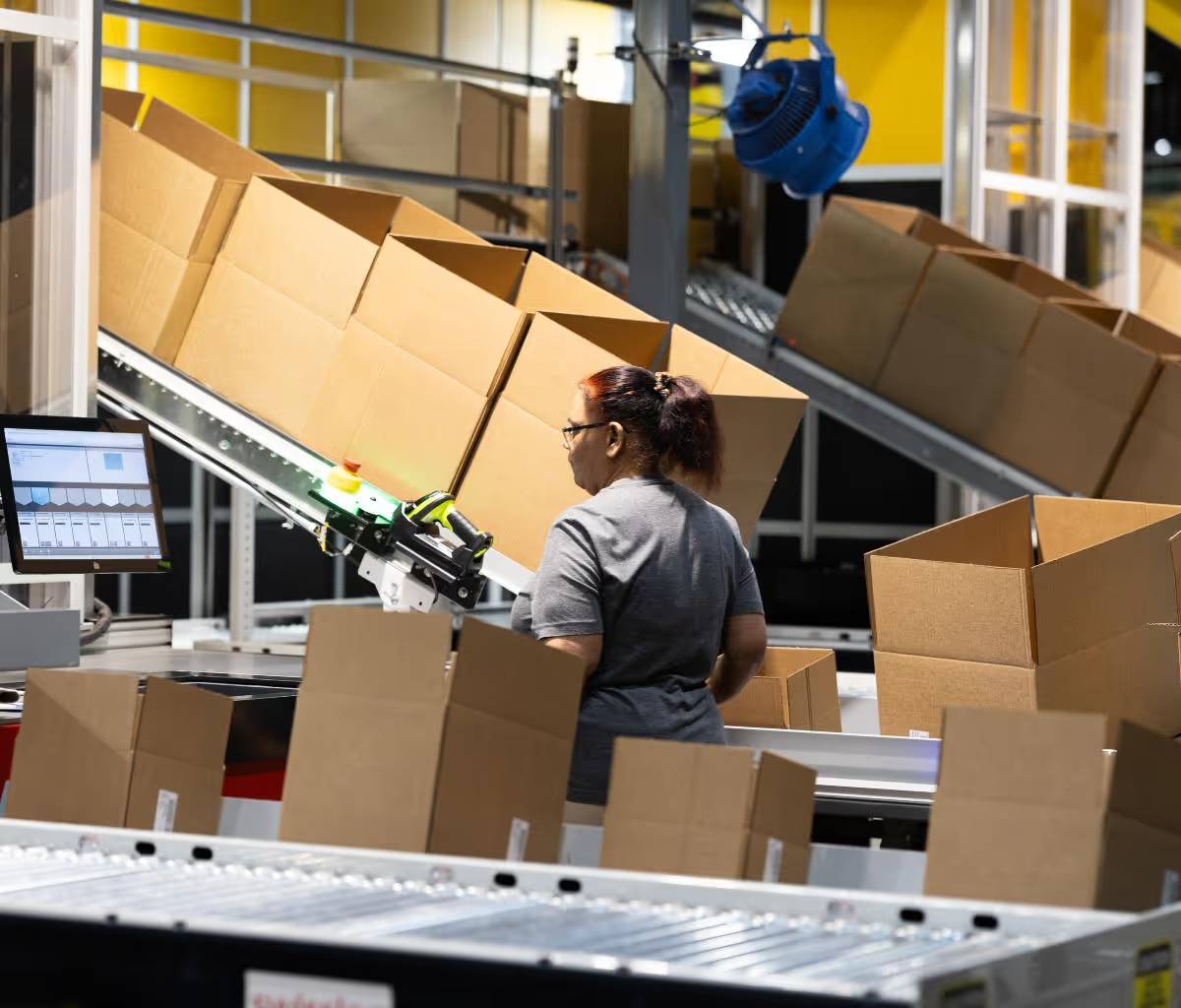
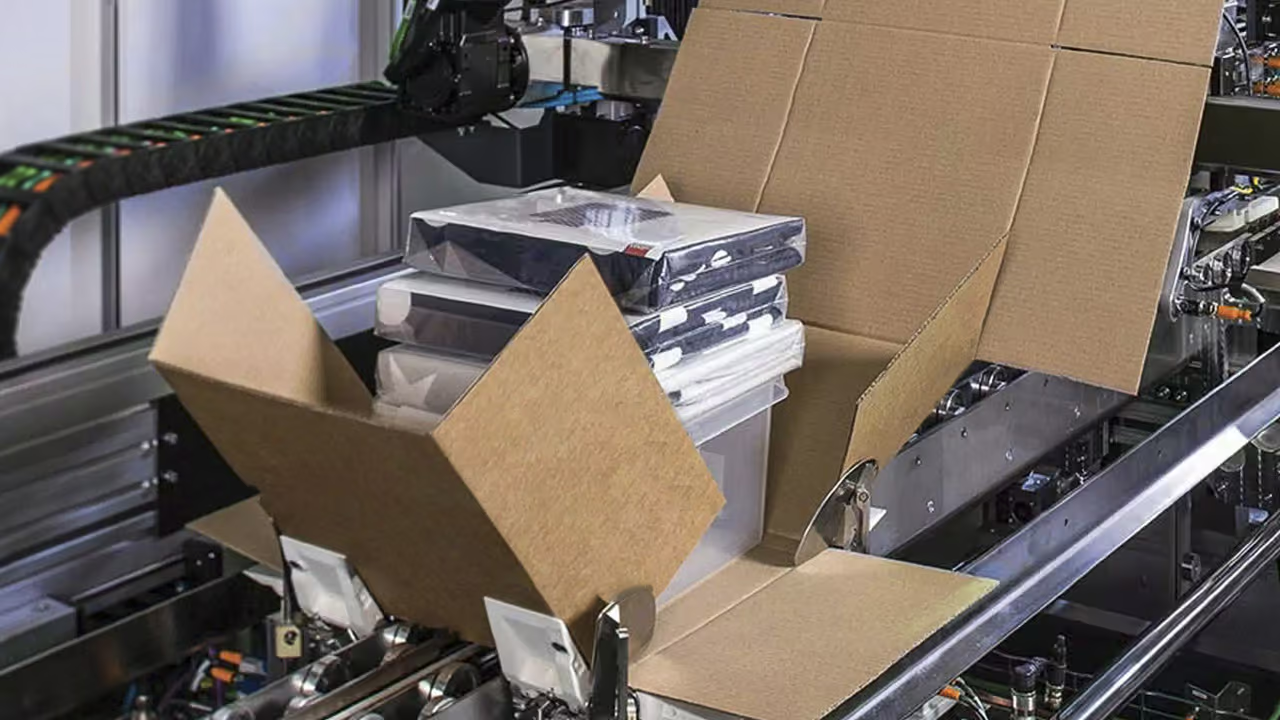
Many fulfillment operations ship a wide range of SKUs with different shapes, fragility levels, and dimensional requirements.
Managing this variability using a fixed assortment of carton sizes can increase complexity at pack stations and lead to inconsistent packaging decisions. Custom packaging design strategies enable operations to adapt packaging specifications dynamically based on product characteristics and order composition.
Packaging becomes more responsive to real demand rather than constrained by predefined box inventories.
Damage during transportation introduces additional costs beyond product replacement.
Returns processing, reshipment, customer dissatisfaction, and operational disruption all contribute to the total impact. Improving packaging design can help reduce the likelihood of these outcomes by providing more stable product containment and more consistent packing methods.
For many organizations, packaging optimization is a practical way to address avoidable damage rates.


Protective packaging should not require excessive material or complex manual processes.
Custom packaging design aims to achieve the necessary level of protection while minimizing corrugated usage, secondary packaging materials, and pack time. When packaging specifications are aligned with both product needs and operational realities, fulfillment workflows become easier to standardize and scale.
The goal is performance that supports efficiency — not protection that introduces new constraints.
Packaging design improvements often require evaluation, iteration, and validation.
Organizations may assess packaging performance through testing protocols, shipment analysis, or pilot implementations. Working with a packaging design partner can help translate product characteristics and operational goals into practical packaging specifications that support both protection and efficiency.
Design decisions become more informed when supported by data and real-world testing.

Organizations typically explore custom packaging design when they are:
In many cases, improved packaging design can create measurable operational and customer experience benefits.