Calculate Your Savings
HERE
Boxes Created 1600000000
90000000 CO₂ Saved (lbs)
4518639.77 Trees Saved



Warehouse automation conversations often focus on picking, throughput, and equipment. But when packaging is treated as an afterthought, operations can end up shifting bottlenecks downstream instead of eliminating them.
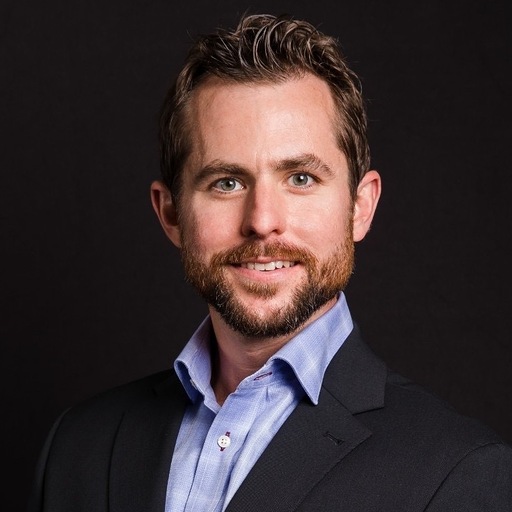
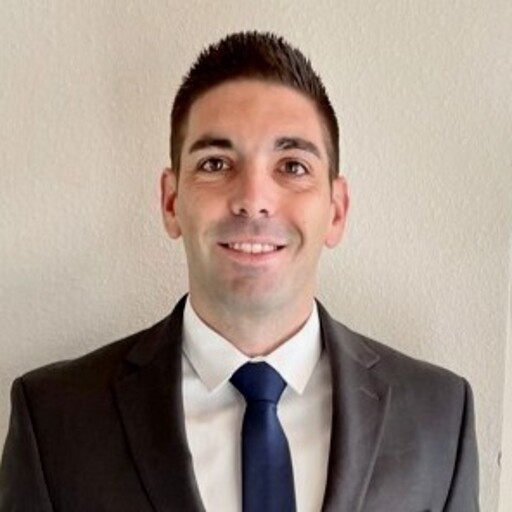
Join Matt Kelly, Head of Global Business Development, and Nick Soares, Senior Director of Partnerships, for a discussion on why packaging should be part of the automation conversation from day one. Together, they explore how right-sized packaging impacts labor, throughput, ROI, transportation costs, customer experience, and long-term scalability across both greenfield and brownfield operations.
Learn how integrating packaging into the broader fulfillment strategy can reduce touches, improve flow, and help operations avoid costly changes later.
In this episode of PackPod, Matt and Nick break down how packaging connects every part of the fulfillment process — and why the most efficient operations are designed with packing in mind from the very beginning.
Matt Kelly: Greetings, and welcome. I'm Matt Kelly, here at Packsize. I head up our global business development. So my team is really the tip of the spear, trying to explain to customers, understand what customers are doing in their fulfillment process. And one of the topics today that's very exciting and is often overlooked is packaging. And really looking at packaging as a very integral part of the picking and fulfillment process. From the time that the conversation happens to the data is analyzed to the solution is concepted and presented to the customer and then it's finally implemented and used, everything matters. It's not just picking, not just packing. It really is everything within the four walls working together hand in hand.
And so with me is Nick Soares, who's our Senior Director of Partnerships. He and I bring a tremendous amount of experience in this space, whether it be sortation systems, picking engines, or packing. I think today is going to be a very interesting conversation. Nick, it's good to see you. Good to be here with you.
Nick Soares: Thanks, Matt.
Matt Kelly: One of the questions that’s top of mind for me is when an organization is looking at automation, I think quite often packaging is an afterthought. It gets deprioritized in much of the scope of work and the conversation that an organization has with a major OEM or an integrator. Why do you think packaging is often overlooked in some of these initial conversations and designs for a customer to look at?
Nick Soares: I think one reason is it’s easy to push packing out because it’s something that people perceive to be easy to do later. But when designing a building or a goods-to-person system, if you're not thinking about automating packing, it actually becomes much more difficult and much more constrained to add packaging later.
And you just get a lot of bang for your buck automating picking. You see the flashy robots and the goods-to-person systems, and you see a lot of people removed from the facility. What often is overlooked is that those people end up shifting more downstream to manual pack tables if packing isn’t attached at the same time.
Matt Kelly: That's a great point, and it ties back into ROI at the end of the day. ROI is often looked at from subsystem to subsystem. “Can I get ROI on this ASRS? Can I get ROI on this order? Can I get ROI on this packaging machine?” I think quite often you end up doing things piecemeal. Then at the end of the day, the people that actually look at the whole warehouse and the P&L go, “Well, where's our ROI? We just shifted all these pickers. Now they're over here. Packaging is still manual. What happened?”
Well, let’s automate packing. But the problem at that point, and I’m curious about your opinion here, is doing things retroactively. Once you want to automate packing, what kind of challenge from a design standpoint does that present to the operation to now adopt something downstream that they didn’t think about upstream? Is that flow really a significant bottleneck in how orders are received, picked, sorted, and then packed? I’ve certainly seen it, but curious your thoughts Nick.
Nick Soares: Yeah. It really limits you in terms of touch reduction with packing. Once you already have – even a lighter automation like a pick module – in place or a goods-to-person system on the heavier automation, the infrastructure is already in place with the conveyor how to route boxes. So more often than not, you're just going to put everything into a tote and feed it downstream to packing.
So it helps with picking and not having to pick directly in to the box to get faster pick rates potentially, but now you're double-touching things later. It’s really difficult to add in sequencing right-sized boxes to a pick station at a goods-to-person system after the fact. That’s where we use our Everest, Impack, or X7 systems and get everything out of the goods-to-person system, convey it to a single point. But now you have more space considerations that you have to design around downstream, and then you’re going to add touches to the process that could have been eliminated if you picked directly into the carton from the get-go.
Matt Kelly: Yeah. You called out a couple things, and I think it's important for the audience to understand. When you're designing these types of systems where you want to really eliminate extra touches and you want to enable a picker to also pack, the amount of sequencing and coordination that has to happen between the ASRS system and the packaging element is significant.
If that’s not coordinated well, it can cause serious bottlenecks, or it can cause extra touches, which adds labor costs, which adds complexity, which adds time with which an order can be fulfilled and shipped out the door, so your SLA becomes even more stressed.
One of the things I noticed when I was working for a major goods-to-person grid system was that we had several Packsize implementations and discussions, and it was all about how do we sequence the right-sized carton that a picker at a workstation is going to pick that product into it and send it downstream.
That wasn’t an easy thing to do, and that was probably five or six years ago when Packsize was really knocking on the door of high-automation. It was not an easy thing and I was proud to represent some of the integrators who were able to figure out the sequencing between a major ASRS and the packaging element because for the customer, now they can look and thier operation and go, “We’re covered end-to-end. We’ve got the right goods-to-person, storage, picking, put away workflow and then it feeds right into packing. We have the absolute leanest labor force in order to get the same amount of orders in the SLA required by the customer.”
On the flip side, that’s box-first – so that’s presenting the box to the workstation for that single-touch pick to pack. But we also have a tremendous amount of customers who have unfortunately invested in automation upstream that has probably created a bottleneck that they did not anticipate at the packaging level. And that would be a brownfield facility, where it’s not easy to reinvent how they pick. It’s not easy to sequence the right-sized box into that picking workflow. So, the box-last solution, which is part of our portfolio as well, is really advantageous for them to look at.
Regardless of what you’re doing in picking, all the picker or packer has to do is place that item on the conveyor belt and the box is built around it. You don’t need DIMs, you don’t need waste, you don’t need any of the sequencing elements. It’s very easy to implement in a brownfield, very intuitive for that process.
We’re lucky as the OEM to be able to provide two different solutions depending on where a customer is. But from my perspective, especially working with some of the major integrators like you and I do, the earlier we can start these conversations about how you're going to pack, the less bottlenecks we have to fix and band-aid over in the years after these things go live.
So Nick, when you're working with the big integrators and in your experience with the arm picking and sortation companies, how important is the end-of-line process in the design side of things? How does that get factored into the business case discussions between a major integrator and all the subsystems like Packsize that have to be considered before they move forward with that?
Nick Soares: Super important, obviously. And you touched on a good point with Packsize being able to do box-first or pick-to-box or box-last, where you may be picking into the tote and bringing the product to one of our systems. The data is going to tell the story.
Working at the goods to person system, we may have both. We may be able to do omnichannel, where we have wholesale orders going, picking directly into the box that we can work with the systems integrator on the design of, what the right solution is, how we want to close the boxes, are we going to use a tray and lid, or are we going to use a box with flaps and tapes? And then maybe there's a high amount of single unit orders. We may batch pick, out of dedicated ports or pick stations and then send them to one of our box last systems.
So if we're in the design on the front end, not only will Packsize do the heavy lifting on machine qualification and what the sizing is of the solution, but also what the impact is and how we can impact the overall ROI of the goods to person system, including packing. So if you're increasing your pick rates maybe from seventy, eighty units per hour up to, 300, 400 units per hour/lines per hour. You need packing to match that rate. Otherwise, like I said before, you're just going to move that labor, they're going to be packing 70 units an hour downstream of the system, and then you're going to see your goods to person system end up getting clogged up.
That’s why we like working and really my whole role is working with systems integrators to help them feel more comfortable working with Packsize technology and really what our use cases are.
Matt Kelly: Have you noticed any issue, because I certainly haven’t, with Packsize being able to pack at the speed that picks take place? I mean, you've got some shuttle systems out there that can pick, 800, 900 units per hour. Have you noticed any scenario or any application where the packaging side can't keep up with that type of rate?
Nick Soares: No, even if you think about our largest customer, we have 48 of our X5 systems feeding a shuttle system. We just look at what the design rates we need to hit and then what the best process flow is to add to that. So if we need to break some orders up for box-last or box-first. So we're going to build a solution based on design rates to match the throughput needed. But, really, we're just looking at the design rates, the hourly rates you need to hit, and then we have systems that go from 100 cartons an hour up to 1,100 per hour. So, typically, we can find the right fit once we're involved in early enough. We can acquire the space needed to put our systems in.
Matt Kelly: Yeah. And one of the things I've noticed too, especially in the spare parts side of things, whether that be industrial spare parts or automotive spare parts, is they're not just looking for end of line automation. They're also looking for automation on inbound. And we've seen a number of applications, and I know you've been privy to a few of these with some of the big ones that we've been working on with our X6 machine, where a company is bringing in master cartons of product, and they have to then decant them into smaller containers. And, historically, traditionally, that's all a manual process where they have to put these small little parts into small boxes because that's the unit that they're going to sell them in, and that's how they want to put them away and store them.
And so I've noticed really as our portfolio of technology and solutions has expanded, the applications within the four walls have also grown. And we can influence, not only the end of line and what happens at the pick, but also what happens in the decanting and put away process. And I think that's quite compelling. I mean, I've seen designs where we have an X6 on inbound. We've got an X5 feeding the right size box to a workstation or to a port at the pick. And then for anything else that maybe there aren't weights and dims for, you can slap it on a box-last machine, and the right-size box is created around it for final shipment.
So, to me, that's fantastic. Then I'll be remiss to not include the non-conveyables. We have a machine for all those big and ugly items that it's very hard to find stock boxes for and to store them in a cost-effective way. I do have a question though on the non-conveyable side. We have a lot of integrators that focus on conveyables. They focus on ASRS and high-volume pick to pack workflows. But then there's all these other items within certain operations that are still very manually handled and manually packed. And it's a tremendous strain on the operation to be able to stock the RSC that maybe can pack that item not quite the right size. Do you feel like integrators and true material handling experts are starting to recognize that the world of non-conveyable packaging, even within a high throughput facility, is a tremendous area that we can influence and provide value in?
Nick Soares: Yeah. Absolutely, especially when looking at brownfield opportunities, going back to existing customers where maybe they already sold the goods to person system and they're working with their continuous improvement teams, add existing customers. And that's an area that's really glaring for us because it's not as disruptive, implementing on demand packaging in a non-conveyable area because there's typically dedicated space for it. There's not a bunch of infrastructure getting orders in and out of that area because it's non-conveyable. So you're dropping pallets off, potentially, or large carts. And then the packers have, of that area, the hardest job. You don't have any of the packers in the building because, not only do they have to pick up these heavy items, but they have to figure out how to pack it because they probably don't have a box size that it fits in. So they may be taking two boxes and trying to tape them together to fit items in.
And we typically have a really fast payback in these areas because, while it may not be a high amount of volume in the total building, but the percent savings per order is so high because, dimensional weight, how much material they're using, they're probably buying these boxes on more shorter runs because they don't use as many of them. So there's higher material savings and transportation savings in this area without having to disrupt the entire flow of the building to be able to implement something. And, typically, we're in a smaller footprint where we can operate maybe in a 15 by 20/25-foot work cell, replacing five, six, seven pack stations.
Matt Kelly: It's not easy. The footprint is auto challenged. We have some high automation equipment that does take up a significant amount of room. But to me, what's encouraging is that we do have some solutions that regardless of what has been done before, it can certainly apply and not cause significant disruptions in the flow.
I'm a big believer, and Packsize certainly aligns to this, we want to partner with and come alongside the end users that we support and the integrator partners that we work with and sell through. And I think to do that, you need a portfolio that kinda meets the customer where they are in their automation journey. Not everybody is in a greenfield type of scenario. A lot of times it is, “Hey. We have to stay in this building. We're out of room. What can we do to put some type of equipment or solution in that can replace a significant amount of real estate, whether that's manual pack stations or whether that's just pallets and pallets of boxes that are unerected sitting there waiting to be selected for orders and then shipped with a lot of air and space and dunnage and tremendous cost.”
I don't think those conversations are easy. And I think there's a lot of customers
that maybe are excited about exploring some of this, but they do look at the change management of some of these implementations, and it can be overwhelming. Have you noticed greater adoption among end users and then, partners and consultants who are able to really explain to end users that implementing these solutions, whether it's greenfield or brownfield, box-first, box-last, doesn't come with a significant lift, but just enough to really provide that ROI that does make it worth it. Like how do you truly see integrators positioning Packsize and packaging as a whole, in a way that is easy for companies and customers to move forward with confidently?
Nick Soares: Yeah. The unique part about Packsize is we start engagements from multiple different avenues. So it's not just one department that brings Packsize in. It's not just operations that every time we're going to improve packing, and it's not, it could be procurement because, they're looking at their box cost, the material cost. It could be a logistics department because they see how much they're paying in transportation. They're getting hit on DIM. It could be marketing, because they're the customer experience of receiving the orders, their damage rate is high, and they're having crushed boxes. So it's always been interesting with Packsize.
And one of the fun parts about working here is you see so many different things. You deal with so many different departments. But at the end, it helps the decision-making unit come to a yes that you have more people that we’re impacting in the building. So when I think about who the systems integrators are working with, I think on the engineering, the operations, supply chain side, we're starting to bring more people to the table and help them get deals over the line because, we're getting marketing people in the room to say, yes, sustainability people, in the room. We're getting more people that can reach that same consensus, and that's helping push our projects over the line than maybe other ones that they're looking at.
Matt Kelly: That's a good point. We have a few new people joining the team, and we were just having this conversation the other day about who gets involved in this decision-making process and who matters to this process. And it's actually quite vast. You've got marketing, because this is direct to consumer, often experienced for a customer opening a box at their door. You've got operations where throughput and cost of labor is critical. You've got finance looking at the numbers. You've got engineering that has to sign off on the software, and IT has to approve an integration, and don't forget legal. I mean, it's a vast amount of stakeholders all for an end of line solution.
And I think that's why it's so important for integrators and for system providers to look at packaging as part of the whole solution, because by the time you get through all of that discussion to implement an ASRS system or some type of conveyance sort solution with controls and integration, and all that, you might as well look at the packaging side because guess what? The customer's going to start screaming about it pretty soon. And I saw this all the time when we were at MODEX a few weeks ago. Customers would come up and they would say, “Listen, we've got this solution, and we need this. So I'm watching what you guys have on display here, and this is exactly what we need. I don't need to be an engineer to say that that's exactly what we need.” And that was both encouraging but also frustrating because if I was, somebody who had to provide value day in and day out to a customer and I've already supplied them with just about every piece of material handling equipment I can think of, and I haven't looked at the packaging process, then shame on me. Oh, and by the way, when I look at the packaging process, I probably would have done something a little different on the picking and put away process. And so, to me, that's the biggest call out for anybody who's looking to provide value in the four walls of an operation: do not forget about the packaging process because it can cause a significant bottleneck if it's not done right. And if it's not thought about on the picking, you may, incorrectly design the picking process.
So one of the things that, Nick, I do want your perspective on is when -- and I've certainly been at organizations where scale was a significant value sell. “Just buy what you need today, and it's very easy to scale. It's flexible, future, flexibility, all that kind of thing.” When things aren't going to scale, what are some of the early indicators that a customer has maybe invested in something that is not going to grow with them as they grow? And how does that kind of relate to their decisions around the packaging process?
Nick Soares: For Packsize, we got started with the Packaging as a Service model. So that's always helped us grow with our customers. So if I think back, some of our big logo customers may have started with IQ Fusions or EM7s. And as we've developed new technology, we've grown with them. So we've either replaced systems or added to them.
So when we look at scaling with customers, Staples is probably our best example. They've been very public with us. They started with the IQ Fusion, and they've gone up to X4s now. We're able to work with them to eliminate some labor associated with the packing. And then as we need to hit higher throughput requirements, we just build in that space in the front end and then add systems as they need them, without having to invest heavy capital.
Matt Kelly: Yeah. You bring up a great point. I mean, from a commercial standpoint, flexibility standpoint, partnership standpoint, I think the Packaging as a Service model is critical because it's not easy to predict five, ten years out. And I think we have comforted a lot of end users and help decisions be made much easier when you can do it as a service. So you don't have to worry about obsolescence. You don't have to worry about a company, you know, 3x-ing their volume and now the machine that once aligned to their daily needs now is totally obsolete. To me, that's a very compelling commercial benefit of Packsize is that as a service model where we can swap a machine out, we can add a high throughput machine and take the low automation machine
out. But also, I think from a technical standpoint, you know, there's a software element too, and there's a technical service element to all that we do at Packsize and then all that our integrators represent.
The worst thing, and I had a call just recently with a major retail brand where all the integrators they've worked with are sunsetting, not only their hardware, but their software as well. And I think it's important for us as part of this system to work with integrators whose software is still viable. It's very flexible. It can influence other subsystems, whether it be a goods to person system or any conveyance sort, and then also feed into Packsize and sequence appropriately. There's no worse bottleneck that I've seen than a WES or WCS not working properly. And I've seen it both at the OEM, and I've seen it, you know, even with customers. I've spoken to it in my time at Packsize. I think that's critical, and it goes to what we do to onboard our partners, what we do to vet different integrators that we work with. Because if you can't provide end to end solution software, the support to go alongside of the whole solution, including the packaging element, then at the end of the day, the customer is gonna have downtime that's going to make everyone who provided subsystems to the customer look pretty bad. And at the end of the day our reputation is certainly important, but our customers' health and success is far more important.
And that's something I think I'm proud to really stand behind is we're not looking for, “Here's this equipment. Let's place it and call it a day.” We are a partner, and we're there for the long haul, whether that's at the technical level, software support, or whether that is helping customers scale and grow and finding the right machine to align to whatever workflow that makes sense for the fulfillment operation that they have today.
So, I think that's all well said. One of the things, Nick, I was thinking about too as we were talking, is that when integrators approach a greenfield and, let's just say it's an e-commerce company that's looking to scale and think about the future, What do you see integrators look at first and analyze from a total holistic type of end to end solution? And how are we and your team coaching integrators and partners and, thus, the customer to really think about how to design this in a future-proof way when it comes to a greenfield solution?
Nick Soares: Yeah. So we know Packsize asks for information that systems inquiries may not be asking for data points. So we really care about the box sizes that they're using on top of the order data. So everyone's pulling WMS data, looking at batch factors for sizing solutions, what the throughput requirements are, peak, non-peak. But we want to look at what is our impact, in terms of right-sizing, cube size, and then can we reduce the number of orders being shipped out? And that's a point that gets overlooked often where we may be able to consolidate orders. And now, we're impacting the design rate and lessening it because you don't need as many cartons to go out the door as previously they were when they were manual, and using stock boxes. So I think once the good to person system and the throughput rates are finalized or designed at least at the ROM level, we start looking at process wise of, you know, what orders can we do pick the box? Do they have dimensional data? Are they able to collect the dimensional data? Do we need to work with them to set up a process on inbound so that way it could be more efficient picking directly into the box? Or their SKUs just changing constantly where they're never going to collect it, and then we work with them to design a box last solution because it's just not efficient to collect the data and all these SKUs. So, I'd say once there's a framework with a goods to person system, we've done a lot of work in our group of working directly with the OEMs to look at software integrations and designs, the various GDP providers. So that way we can go to the integrator with more of a ready to go or out of the box solution where they're not having to do all the design work on the front end by themselves.
Matt Kelly: Yeah. That's a good point. I mean, at the end of the day, we are a data-driven solution. It may do a pretty narrow thing, which is to pack a box and create something that the customer can ship out to the customer. But it is data-driven, and we are looking at WMS data. We want to understand the orders. And a lot of times, this is part of the consulting and the advice that we provide to an end user. It's not just pick this system and good luck. Sometimes it is influencing how they go about picking, how they go about sorting, and how they distribute their labor in those initial upstream processes, based on how we're going to lay out the packing process.
So I think that's critical. And that's applicable whether it's greenfield or Brownfield. And I think that's what's quite exciting is a lot of, the integrators we work with, they are working on greenfield opportunities with some of their customers, but then they also have those same customers have existing facilities, some of which are swapping out equipment, some of which are at the end of life, and they're looking to replace and rethink how they move product throughout the four walls. So, looking at data, looking at boxes, looking at every little percent of cost that we can carve out, I think, is critical. I was on a call the other day with a consultant who's talking about the 3PL space and talking about how, the DIM factor and freight rates are so critical and they're so costly for these organizations and they're often overlooked, along with packaging. And we were discussing, a 3PL can save their end user on the actual material cost, but then the 3PL can make often more money on that parcel because they're reducing the size, it's now a right-size. And on that truck that they're shipping out, they can fit more parcels on there. So to me, when you think about Packsize, there's so many ways to look at the business case and the benefit that this solution provides, whether it's shrinking the labor at packing, whether it is changing and making more efficient the picking to pack process and that handoff from those two departments and workflows, whether it's cutting material waste out of the individual unit, whether it's increasing the customer experience so that they're not opening a massive box with a tiny thing of lipstick
or toothpaste in it, whether it's reducing the amount of freight that a company has to incur to ship product all over the world. I mean, the amount of benefits are almost overwhelmingly positive and broad. And I think it makes building a business case both exciting and also overwhelming because the value is really everywhere.
And so to me, if I was an integrator, I would probably start both on the front end and the back end simultaneously. And I would meet in the middle with a few different options of how a company is going to store product, decant product, pick, put away, and ultimately pack. And all those communications and the flow between them are so critical. And the tighter they are, the less touches. That's how you get to a point where you can have an SLA under twenty minutes, which there is an e-commerce company that does from the time that the customer places an order on their website to the time it leaves the building. It takes eighteen minutes, and that's only possible when every element of the solution is thought about from storage, picking, put away, and ultimately packing and shipping.
So to me, this has been a great conversation. Nick, definitely appreciate it. The insight you bring from your time in advanced robotics and material handling and your time at Packsize has been great. And I think we have tremendous potential to really influence and provide value to the market in an area that unfortunately has been often overlooked in the area of high automation historically. But, that's changing, and I feel it changing. I felt it at MODEX where customers are coming up and they're pointing to that machine and saying, we need that and we need it now. And that's exciting.
Nick Soares: Yeah. And I would kind of end with this too is, we've been collecting data on our impacts of current customers, over the last several years. And we know on average, not including labor, we're saving over 50 cents per carton shift for our customers. And as working these projects with systems integrators over the last two years, on average, we're taking six to twelve months off of the payback of the total project, because we're starting to include the additional labor savings of picking into right-sized cartons, but also the material savings and the transportation savings that were often overlooked. We're not included in these business cases. So, these are one of the instances where adding in the system is really going to drive down the payback plus have, the outside the four wall benefits that integrators typically aren't seeing, which would be transportation savings, customer experience and then sustainability.
Matt Kelly: Yes. Good point on the sustainability. I totally forgot that. But that's going to be a huge driver in the coming years. I think by 2030, there are quite a few municipalities, certainly in Europe, but also locally in The United States that are going to start to mandate certain organizations to really reduce their carbon footprint. And it's going to start with packaging. And I think there's going to be a tax on a lot of these organizations if they do not right-size and they do not consider the environmental impact that, packaging, whether it be plastic or
corrugate, has on the environment. So that's a good call out and a good call out about the overall ROI. If you can save six months plus on the payback of a total system that maybe costs $50 to $100,000,000, that's a pretty significant change in payback structure and the time to value.
Nick Soares: Yep. Absolutely.
Matt Kelly: Alright. Well, thank you. This has been a tremendous discussion. It's not an easy topic. Automation is not easy to do. It's not easy to design. It's why we're in business. And we feel a little bit of job security knowing that there's a level of complexity, but the benefit and upside is tremendous for the market
and for our customers. And we're very proud and honored to have the partners and to have the customers who have trusted Packsize for their fulfillment needs and for their own customers' experience when they receive product both at their door, but also in the retail locations that they service. If you have any questions, you can find us at packsize.com and we'll also be on the road quite a bit at a variety of trade shows over the next few months that you can find us at. But we'll be waiting for you to stop by and see what on-demand right-sized packaging can do for you. And we look forward to your questions, future engagement, and hopefully the chance to work with you. Thank you.