Calculate Your Savings
HERE
Boxes Created 1600000000
90000000 CO₂ Saved (lbs)
4518639.77 Trees Saved

Most packaging waste is not created at disposal. It’s created during design.
Oversized cartons, excessive filler material, and inefficient packaging specifications increase corrugate consumption and generate avoidable waste downstream. When packaging is based on approximation instead of precision, excess becomes normalized.
Sustainable packaging focuses on minimizing material usage without compromising product protection.
The first step is reducing unnecessary inputs.
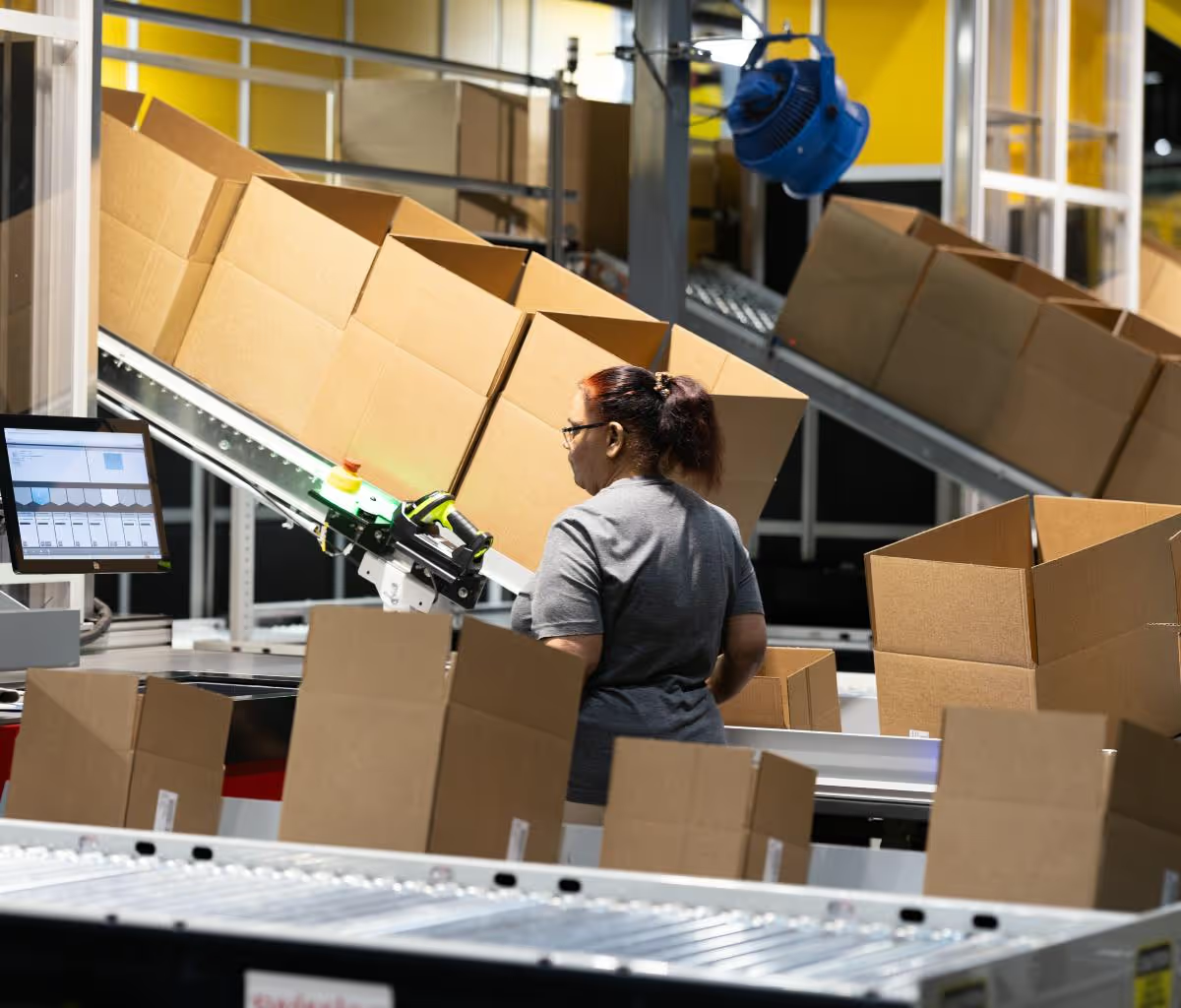

Sustainability efforts often focus on recycling programs and post-consumer waste. Those are important, but they address the end of the lifecycle. Material reduction addresses the beginning.
When packaging is sized more accurately to the product, operations use less corrugate and rely less on secondary materials. That reduction improves environmental performance and lowers total packaging consumption across the network.
For high-volume shippers, even small decreases in material per order can significantly reduce annual corrugated usage.
Waste prevention is more impactful than waste management.
Packaging decisions influence transportation efficiency.
Larger cartons require more trailer space, more pallet positions, and more fuel to move the same number of products. As organizations track Scope 3 emissions more closely, packaging efficiency becomes part of transportation reporting.
Reducing package volume helps lower the environmental footprint of distribution without changing carrier networks or delivery frequency.
Sustainable packaging strategies increasingly account for both material usage and transportation impact.


Sustainability is becoming a compliance requirement, not just a corporate initiative.
The European Union’s Packaging and Packaging Waste Regulation (PPWR) sets expectations around packaging minimization, recyclability, and waste reduction. At the same time, Extended Producer Responsibility (EPR) laws require producers to take financial and operational responsibility for the packaging they place on the market.
Together, these regulations increase accountability for material efficiency.
Organizations operating across regions must be prepared to demonstrate how packaging design reduces excess material and supports recyclability goals. Sustainable packaging strategies help align fulfillment operations with evolving environmental standards before enforcement tightens.
Many companies now report on environmental performance through ESG disclosures and corporate sustainability commitments.
Packaging plays a visible and measurable role in those efforts. Corrugate usage, void fill consumption, transportation emissions, and material waste all contribute to environmental metrics.
Reducing total packaging volume can improve sustainability reporting outcomes while maintaining operational performance.
Sustainability becomes durable when it is built into process design — not added as an afterthought.

Organizations typically evaluate sustainable packaging when they are:
The real question isn’t whether sustainability matters. It’s whether your packaging design reflects your environmental goals.